School Education
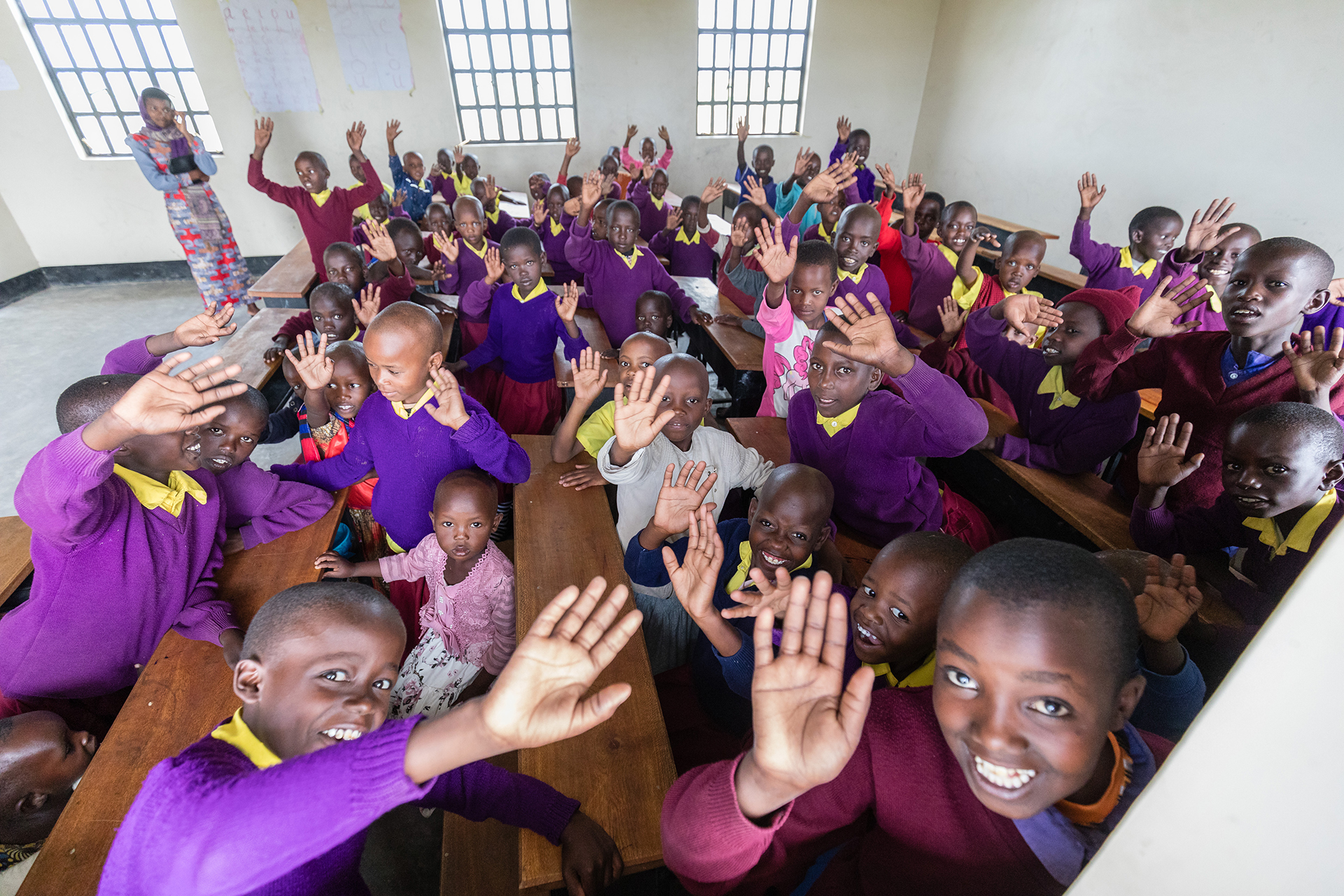
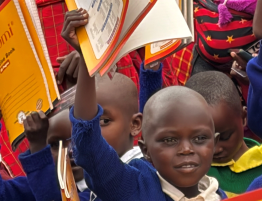
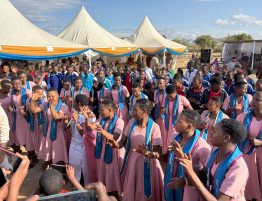
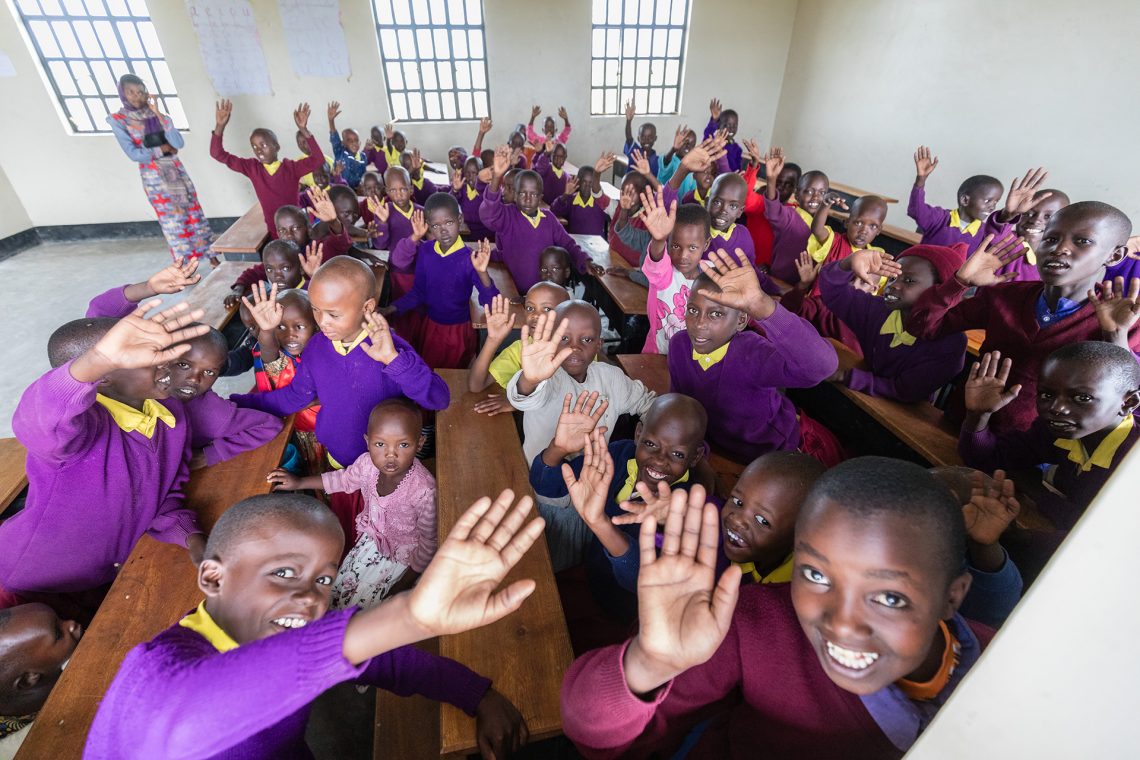
Pupils in the new classroom at Loosiririmi Primary School
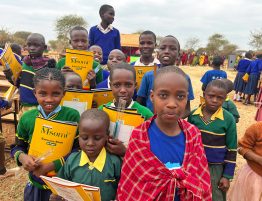
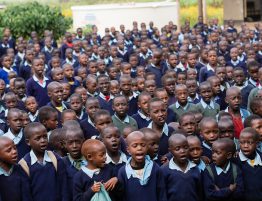
2025 was another successful year for our efforts to improve school education in remote areas of Tanzania. Thanks to the financial support of our friends and several foundations upendo and its Tanzanian partner organisation ECLAT were able to build more than a dozen primary schools, mainly through extension and renovation work, but also through the construction of new schools. Most of the schools are located in the Maasai steppe, but some are also in other areas of Tanzania. The majority of the project sites have already been handed over to the district governments, which have taken over responsibility for school operations and would like us to continue our efforts to improve school education in remote areas. Although significantly more children are now attending school than just a few years ago, classrooms are still overcrowded and many children are excluded from education. The challenge of balancing population growth in these areas with the provision of school education can only be met by continuing to expand the existing school infrastructure.
Last year, we were also able to begin construction of another secondary school in the Simanjiro district, a school exclusively for girls. Thanks to improvements in primary school education, more and more children are now reaching secondary school age. Despite commencing construction only in February 2025, classes for the first intake were able to begin in January of this year. It was a huge undertaking for ECLAT, as the school is a boarding school and therefore also requires dormitories. We also had to drill a groundwater well for the water supply and construct accommodation for the teachers. The government contributed by constructing an electricity line to the school grounds, registering the school, assigning teachers and allocating pupils. Working together, we were able to achieve the very ambitious goal of opening the school after less than a year.
Water Supply
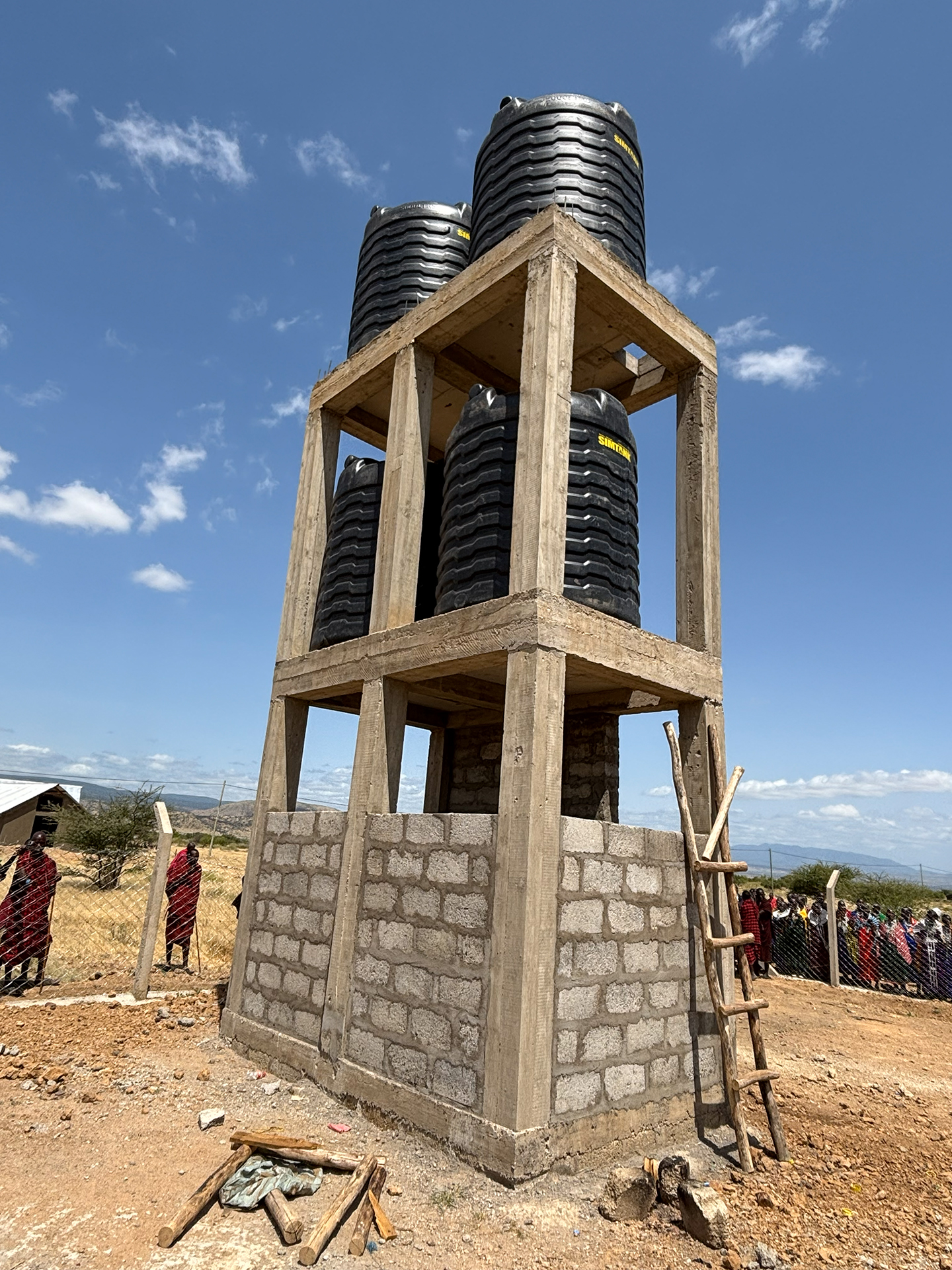
The water from the borehole at Donyonadoo Primary School is stored in storage tanks
Water is becoming a major problem for many communities and schools. Due to the extremely late arrival of the short rainy season at the end of 2025, even our water filtration plants in Narakauo and Naiti were out of water because the lakes had dried up. The high number of children at the schools results in a situation where the water supplies collected from the school roofs in water tanks during the rainy season get used up after a short time. This means that instead of learning at school, the children have to walk for hours to fetch water from far away. Last year, upendo was able to drill a groundwater well for the Orkiringo primary school, where the children have to walk particularly long distances to fetch water. The groundwater level in this area is low, so boreholes have to be drilled down to a depth of 150 metres and the solar-powered pumps have to be designed to be correspondingly powerful. Furthermore, groundwater is not actually found at every drilling site. So far, we have only been able to supply water to a few schools and their surrounding populations in this way, but we would like to expand these projects together with ECLAT. Another water project for one of our schools is also scheduled for this year.
Training for Teenage Girls
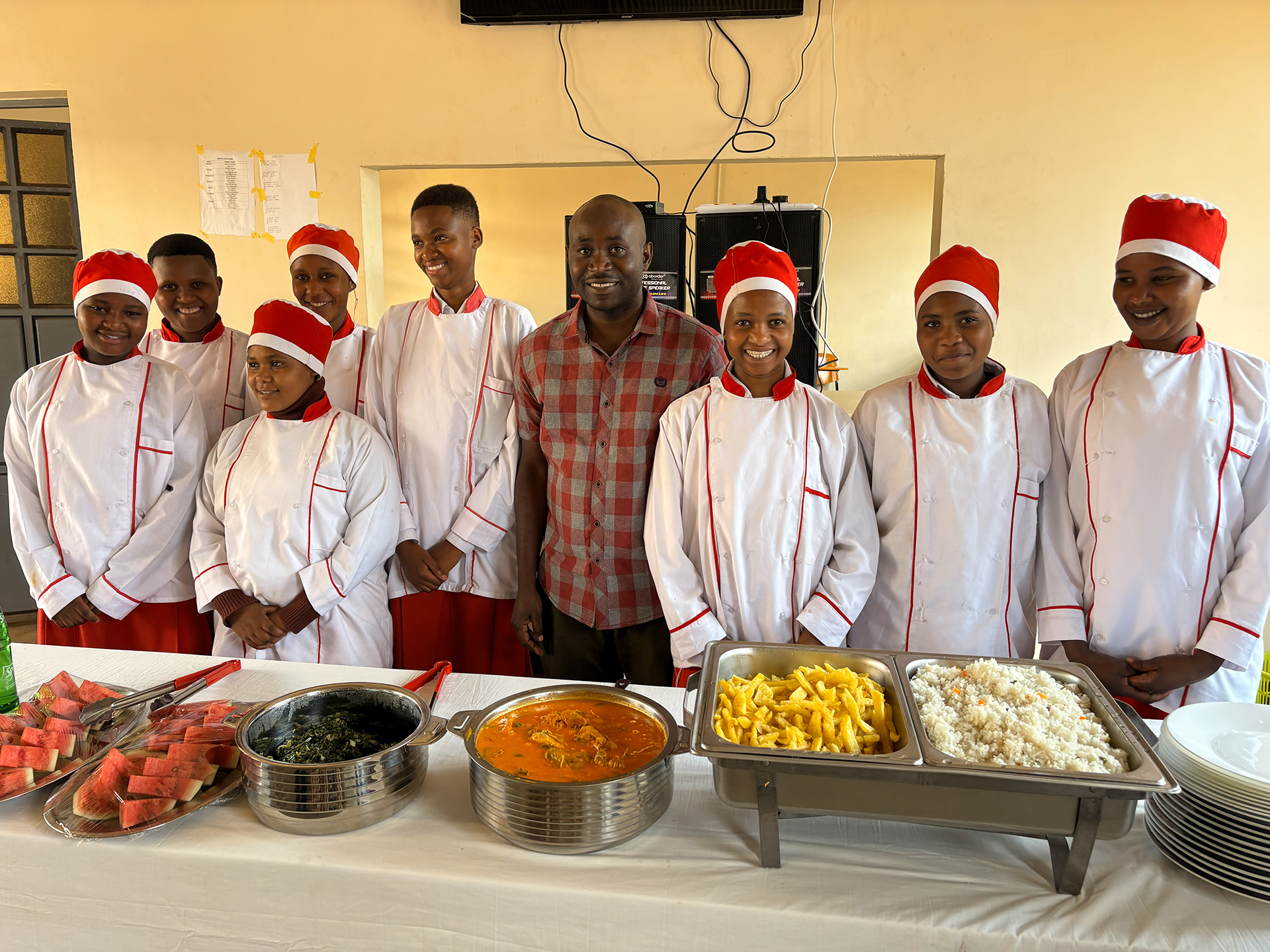
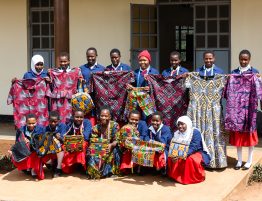
Visit to teenage girls who have cooked for their guests
The expansion of the training centre for teenage girls is progressing rapidly. In January, the second cohort began their two-year training programme. Now, 64 teenage girls are learning vocational and entrepreneurial skills that will enable them to earn their own income one day. Demand for training places far exceeds our capacity. It is very moving to see the enthusiasm and gratitude of the girls, who know very well that they would otherwise have been married off. The centre will be completed in the course of this year, and in November there will be a celebration to mark the completion of the first cohort’s two-year training programme.
Women’s Work
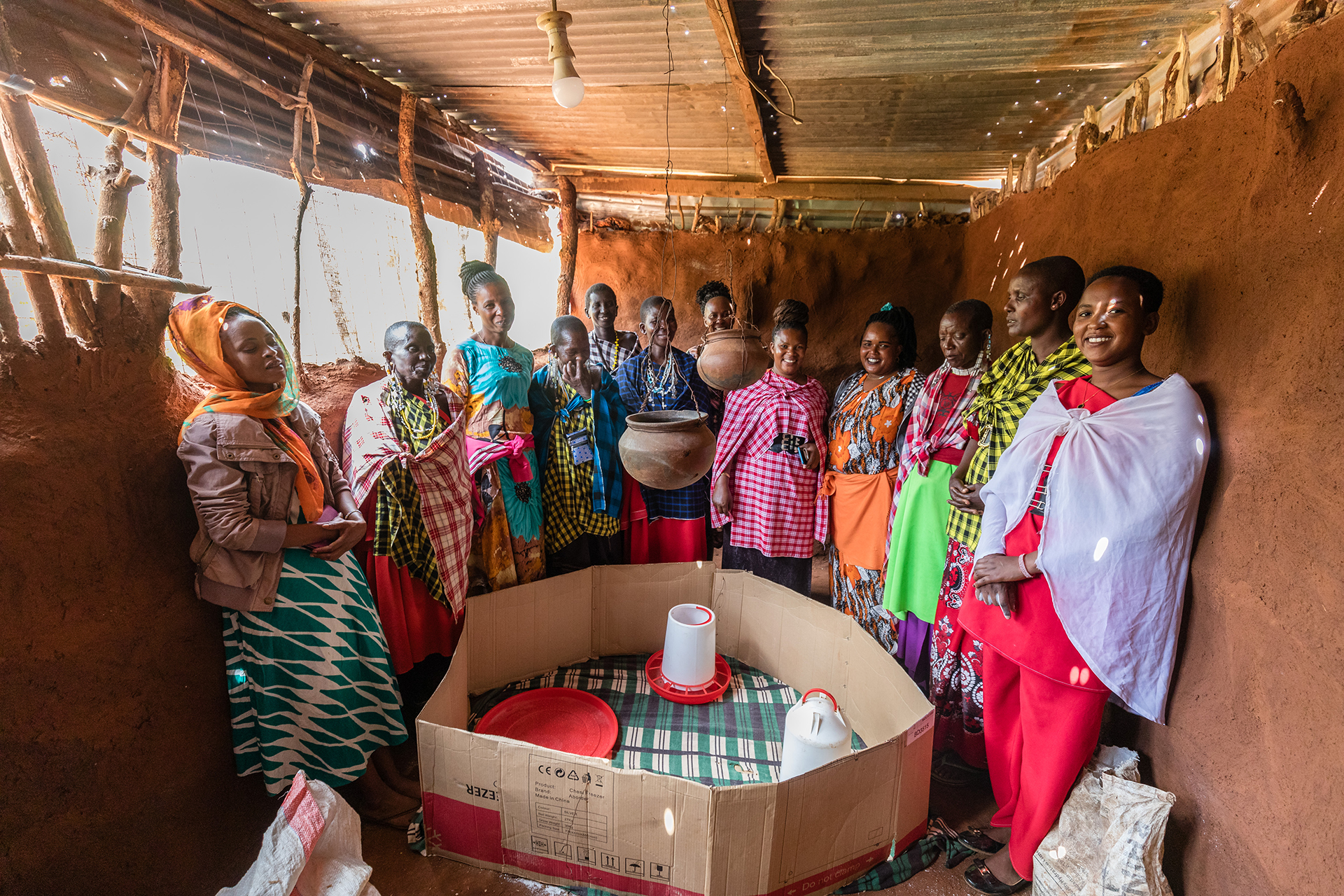
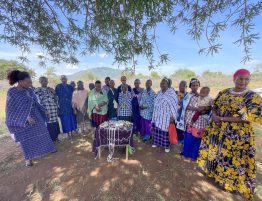
This group of women has just prepared to raise the next batch of young chicks
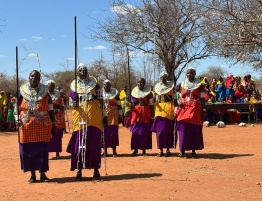
The centre for teenage girls is a special and fundamentally new facet of ECLAT’s women’s work. It works hand in hand with other forms of women’s work to support as many women as possible. In Maasai culture, women are granted little independence and few rights. By establishing women’s groups, women are finding new ways to live more independently and earn their own income, which enables them and their children to enjoy a better standard of living, particularly in terms of nutrition, healthcare and schooling for their children. The ECLAT employees are Maasai women themselves. They have a deep understanding of their culture and provide intensive training to the women’s groups in the production and distribution of goods such as soap and the rearing of chicks. Naturally, topics that concern the women are also discussed, whether personal hygiene or household matters, the relationship between women and men, raising children or family planning options. We at upendo are happy to support ECLAT’s work and, during our visits, we are amazed to see how the sense of self-confidence among women and girls has already changed in recent years and how well this cultural change has been accepted and embraced by their society.
FLY & HELP and upendo – a Strong Partnership
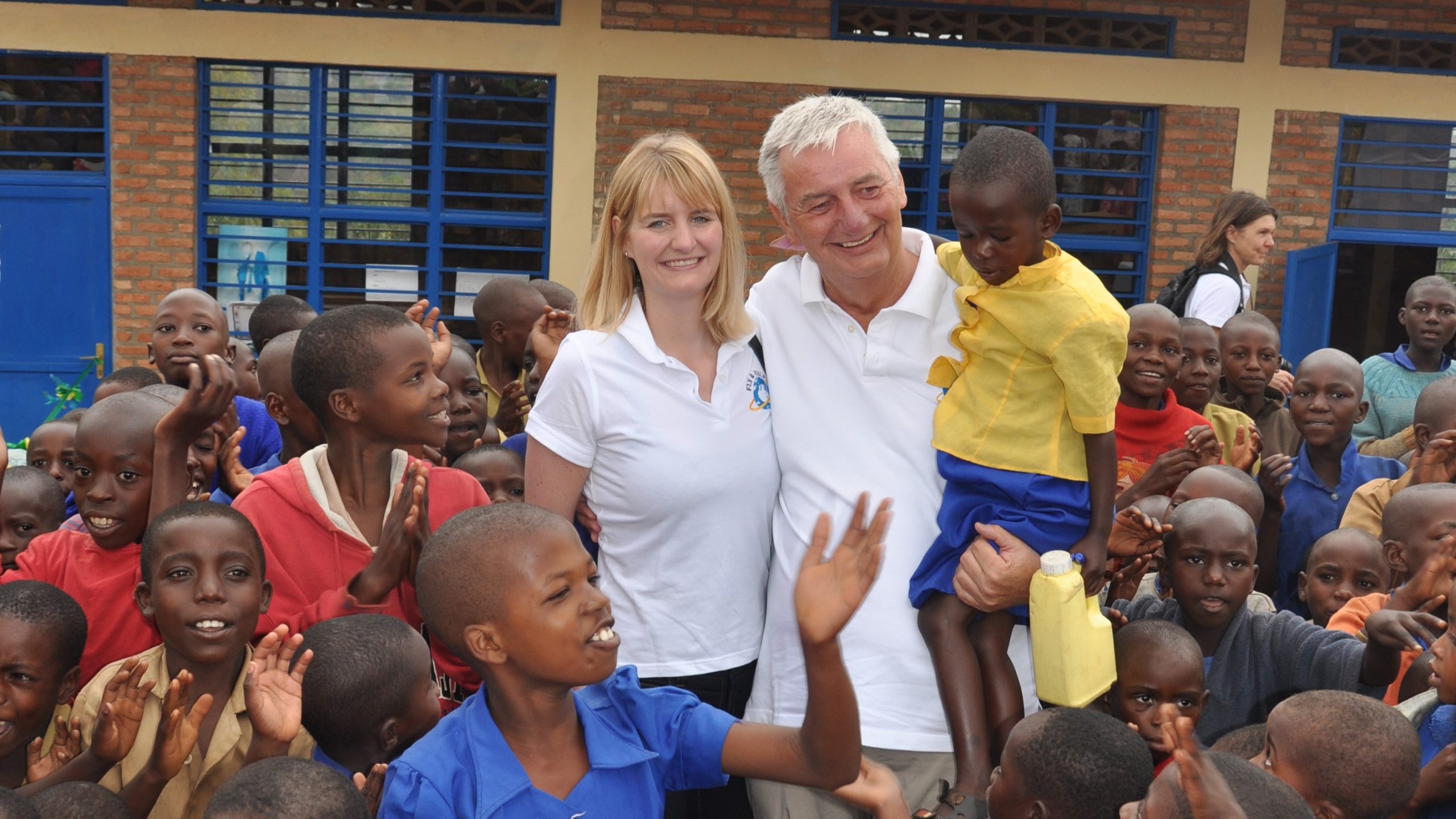
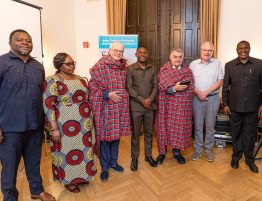
Reiner Meutsch with his daughter Silanca Weihmann
We would like to express our heartfelt thanks to you – upendo and ECLAT – for the wonderful and trusting cooperation in Tanzania. For many years, we have enjoyed a strong partnership that goes far beyond the implementation of individual projects. Together, we have already completed 79 construction projects at 41 locations – impressive proof of how much we can achieve when we share the same vision: to give children a better future through education.
We have been able to convince ourselves of the work on site on several occasions. Each trip has shown us how much commitment, competence and warmth you put into the projects. Many of our donors have also been able to inaugurate schools in person and have repeatedly reported how professionally and warmly they were looked after. These experiences create trust and enthusiasm – and they make the impact of our work immediately tangible.
We are extremely grateful that our FLY & HELP foundation has now been able to build over 1,000 schools worldwide – above all to our loyal donors, who make these projects possible, and to partners like you, who implement them on site with such passion. You are close to the local people, you know their needs and you coordinate the projects with great care and responsibility.
We are very much looking forward to continuing on this journey together – with new projects, new ideas and the same strong partnership that has accompanied us so far. Let us continue to work together to create places where education flourishes and the future takes shape.
With warm regards,
Reiner Meutsch & Silanca Weihmann, FLY & HELP
Photos: Rüdiger Fessel, Fred Heimbach
Layout: Heike Ponge
Translation newsletter (German-English): Marita Sand